SHIFT-MED Advances Green Curriculum Planning and Institutional Sustainability
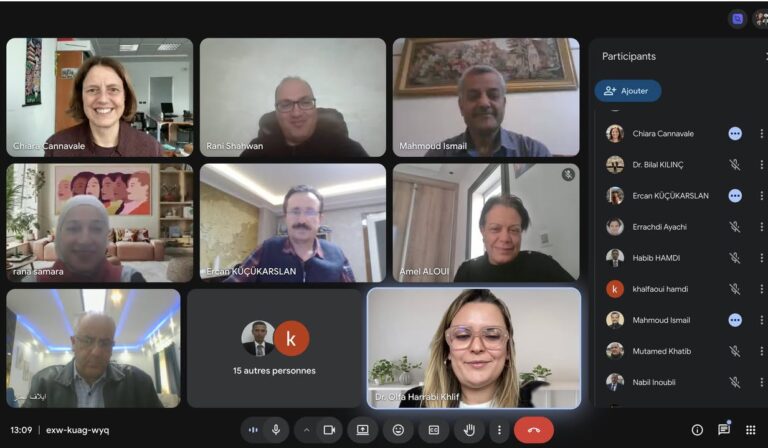
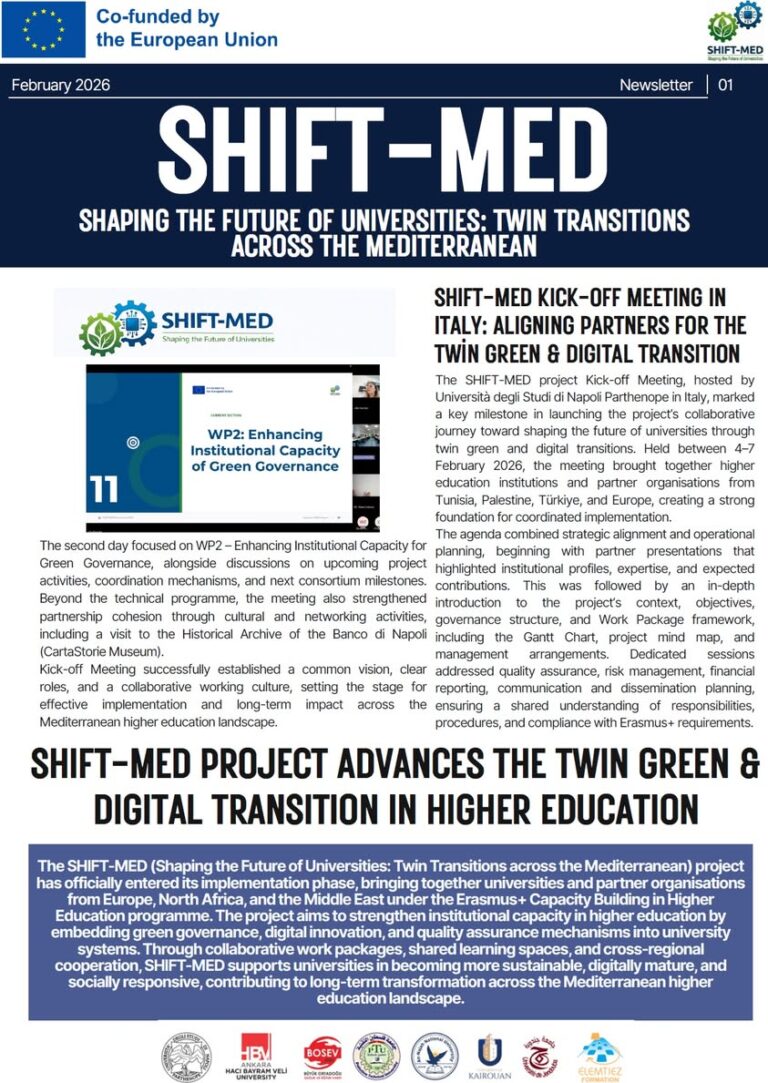
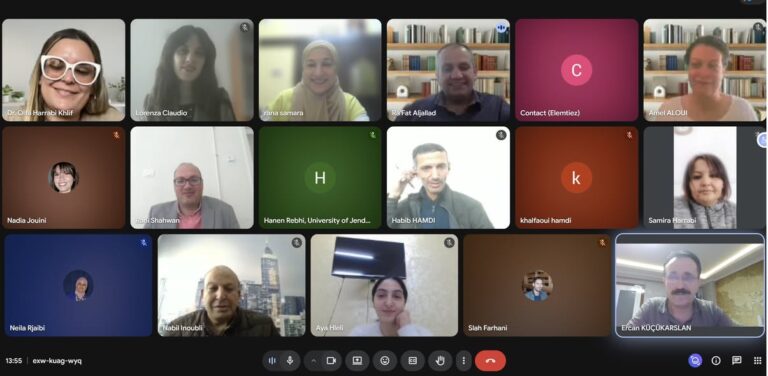
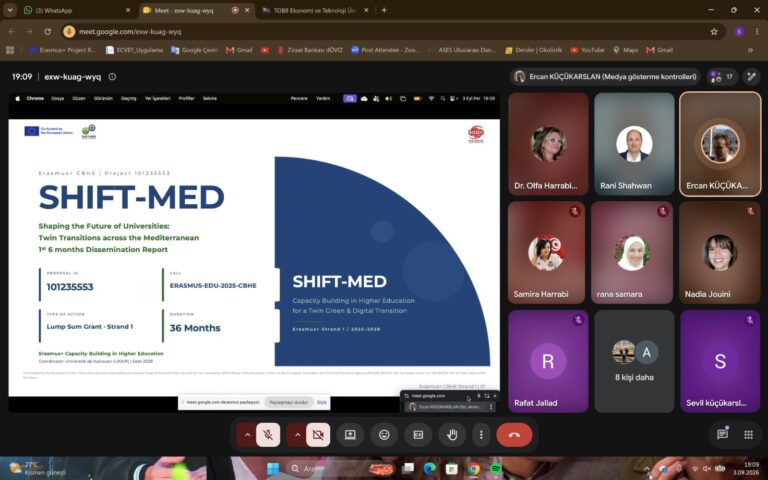
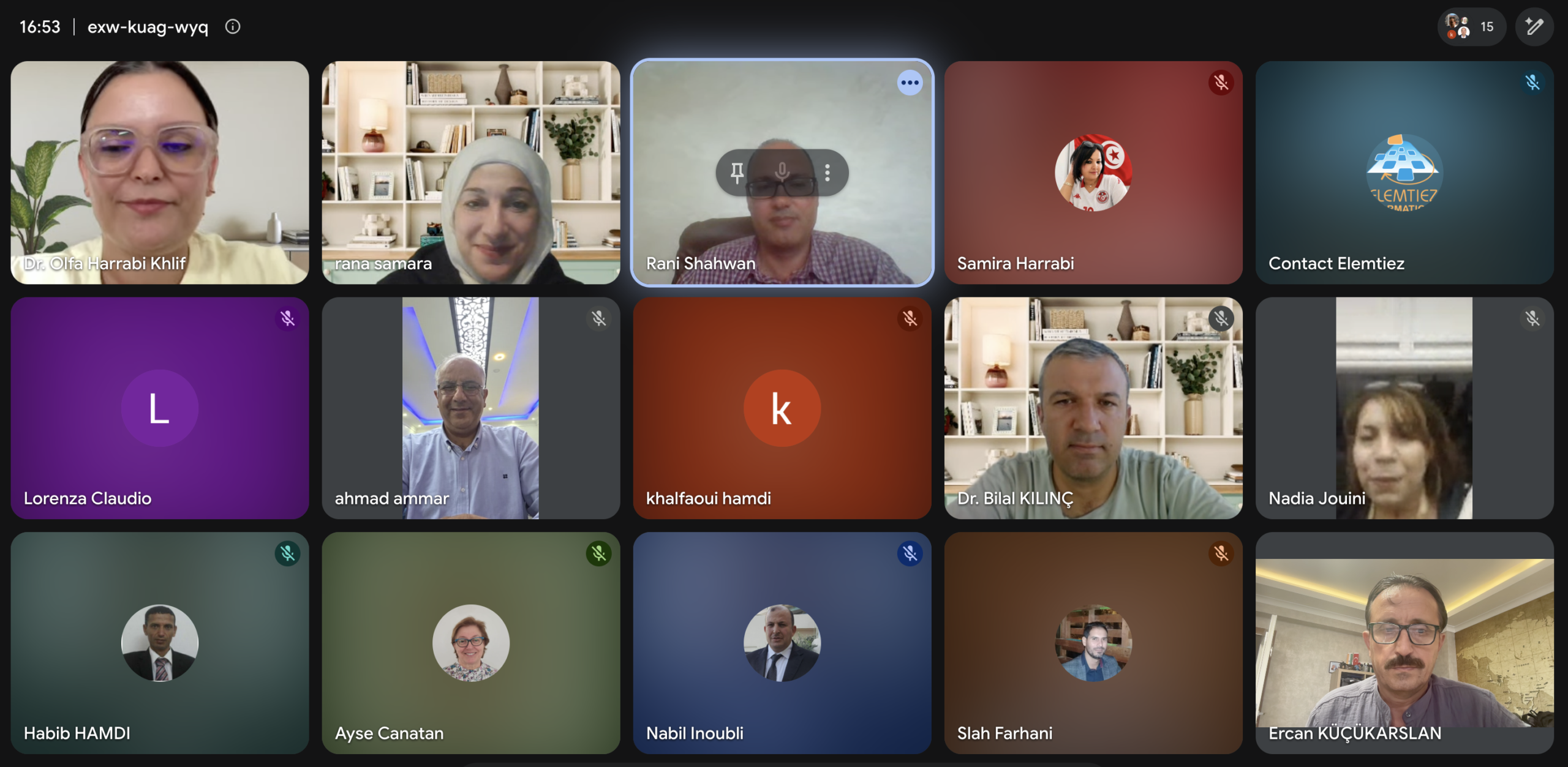
The SHIFT-MED consortium recently held another productive online coordination meeting to review the progress achieved during the first implementation phase and to prepare the next steps of the project. The meeting brought together partners from Tunisia, Palestine, Türkiye, and Italy to align upcoming academic, institutional, financial, and dissemination activities.
The discussions reflected the project’s transition from the initial governance and capacity-building phase towards more concrete academic transformation activities, particularly under Work Package 3.
Shaping the Next Phase: Green Curricula and Academic Priorities
A major focus of the meeting was the planning and approval of the upcoming activities under Work Package 3 (WP3).
Partners discussed the definition of academic priorities for green curricula, including the preparation for integrating ecological and sustainability-related study programmes into partner Higher Education Institutions. Particular attention was given to identifying thematic priorities for new or updated courses and ensuring that future academic content reflects the objectives of the green and digital transition.
This process will build on the outcomes already achieved under WP2, especially the Governance Workshops, Sustainability Committees, and institutional planning activities. The aim is to transform these governance-level achievements into practical academic developments that can directly support students, educators, and university systems in Tunisia and Palestine.
From Institutional Strategies to Coordinated Implementation
The consortium also reviewed the progress of the Institutional Sustainability Strategies and discussed the next steps following their submission and review.
These strategies represent an important bridge between institutional governance and long-term transformation. They are expected to guide partner universities in integrating sustainability into decision-making, academic planning, campus operations, stakeholder engagement, and future institutional development.
The meeting also covered financial reporting requirements, dissemination logs, communication reporting, and other operational matters to ensure that the project remains fully aligned with its implementation schedule and Erasmus+ reporting obligations.
Through continuous coordination and active partner engagement, SHIFT-MED continues to strengthen cooperation across the Mediterranean and support Higher Education Institutions in becoming more sustainable, innovative, and digitally empowered.
The project now moves forward with a stronger focus on green curriculum development, institutional sustainability, and the translation of project results into lasting academic and organisational change.